


The global pharmaceutical industry keeps growing fast. Analysts estimate the market will pass USD 1.8–2.0 trillion by 2030, driven by biologics, vaccines, and advanced therapies. At the same time, many facilities report a clear talent gap. New plants, sterile lines, and packaging areas need people who understand cleanrooms, batch records, and inspections. Here a pharma certificate such as a Certificate in Pharmaceutical Manufacturing closes the gap.
One focused program can prepare learners for multiple entry-level roles, from production operator to QA documentation support, in less than 12 months.
Therefore, this guide explains what a pharmaceutical manufacturing program is, what you learn, and who should enroll. It also shows how this credential supports GMP, QMS, PIC/S, and GDP expectations and helps you plan a long-term career in pharma production.
Table of Contents
What Is a Certificate in Pharmaceutical Manufacturing?
A pharmaceutical manufacturing certificate is a short, job-oriented training program that teaches essential GMP manufacturing skills. It usually lasts 3–12 months and prepares learners for entry-level or junior production roles. Employers value this certificate because it proves the learner understands factory expectations and quality requirements.
Programs focus on practical knowledge. Students learn how pharmaceutical production works, why documentation matters, and how cleanroom behaviour protects product quality.
| Program Element | Typical Details |
|---|---|
|
Duration |
3–12 months |
|
Format |
Online, on-campus, or hybrid |
|
Core Topics |
GMP, processes, documentation, QA/QC |
|
Assessments |
Quizzes, assignments, cleanroom modules |
|
Job Outcomes |
Production operator, packaging tech, QA assistant |
What You Learn in a Pharmaceutical Manufacturing?
During a pharmaceutical manufacturing program, you move from theory to real-world application. You see how raw materials arrive, how teams process them into finished products, and how QA releases each batch. Every module links back to one core idea: protect patients through consistent, controlled processes.
You usually gain four types of value:
Technical understanding of solid, liquid, and sometimes sterile dosage manufacturing.
GMP awareness that links your daily actions to EMA, FDA, and PIC/S expectations.
Documentation discipline so you complete batch records correctly and on time.
Quality mindset that helps you notice risks and support audits or investigations.
Core Topics in a Certificate in Pharmaceutical Manufacturing
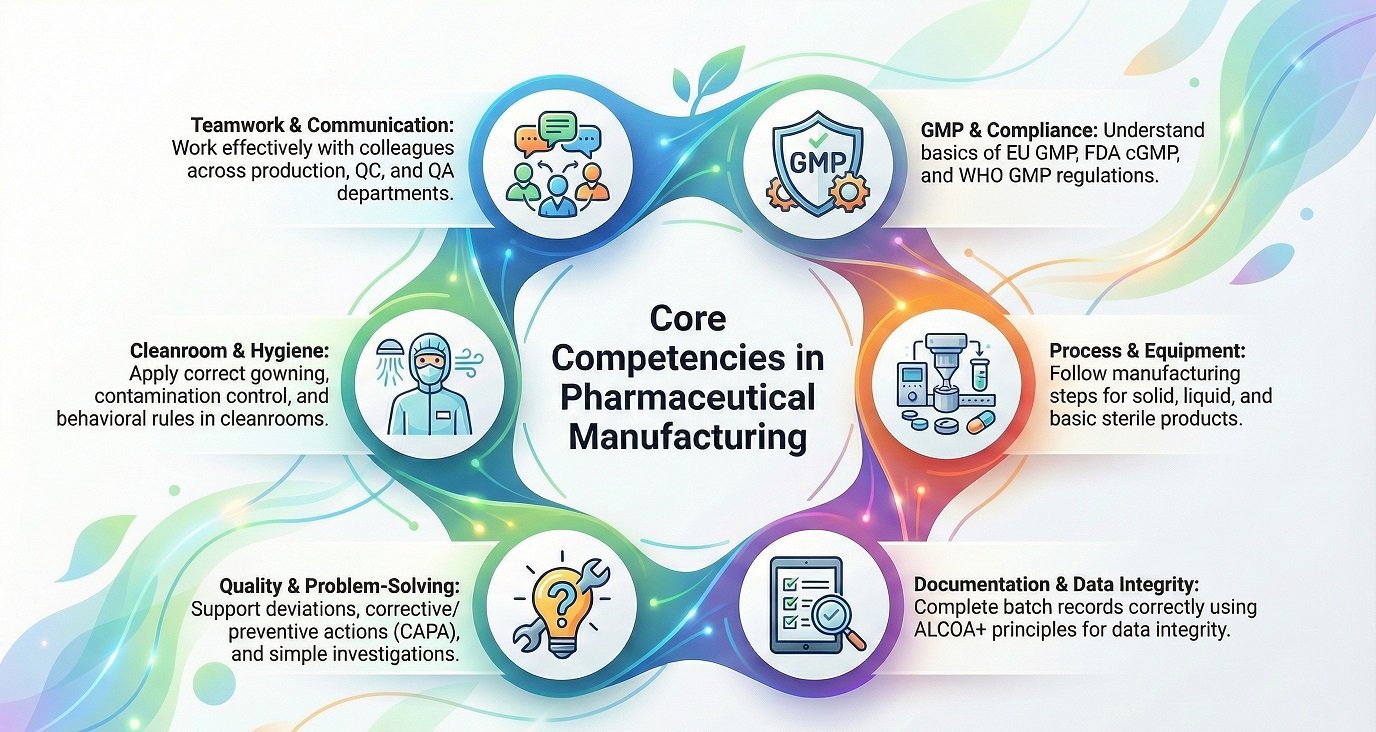
Most programs organise content into a few core pillars. This structure helps you connect separate lessons into one complete picture of compliant manufacturing. Below are core topics:
- GMP Basics and Regulatory Foundations
- Pharmaceutical Manufacturing Processes (Solid, Liquid, Sterile)
- Documentation, Batch Records and Data Integrity
- Quality Control and Quality Assurance Essentials
GMP Basics and Regulatory Foundations
You start with Good Manufacturing Practice because everything else builds on it. Trainers explain how GMP protects patients, reduces error, and supports consistent quality. You also see how different regulators read the same principles in slightly different ways.
Typical learning points in this block include:
Main GMP concepts such as hygiene, controlled change, and validated processes.
Links between Good Manufacturing Practice (GMP) Certification, Quality Management System (QMS) Certification, and daily tasks.
The role of health authorities like EMA, FDA, and Pharmaceutical Inspection Co-operation Scheme (PIC/S) Certification.
Pharmaceutical Manufacturing Processes (Solid, Liquid, Sterile)
Next, you explore how actual products move through the plant. You learn the sequence of steps for different dosage forms and see where critical risks appear. Even if you do not work in sterile areas at first, this overview helps you understand the wider factory.
Common elements of this process training include:
Solid dose flows such as weighing, blending, granulation, compression, and coating.
Liquid dose steps like solution preparation, filtration, filling, and capping.
Basic concepts for sterile and aseptic processes, including cleanroom zoning and gowning.
Equipment basics so you recognise mixers, tablet presses, and filling lines on the shop floor.
Documentation, Batch Records and Data Integrity
In pharma, people often say: “If you do not write it down, it did not happen.” The documentation section of your certificate in GMP and quality control shows why this sentence matters so much. It teaches you how to create records that inspectors trust.
Quality Control and Quality Assurance Essentials
Finally, you learn how QC and QA support every batch. QC focuses on testing and analysis, while QA designs and oversees the system. Your certificate in GMP and quality control does not turn you into a full specialist, but it gives you the language and logic to work well with quality teams.
Within this block, you often explore:
The difference between Quality Control (testing) and Quality Assurance (systems and oversight).
Basics of sampling, laboratory testing, and handling of out-of-specification results.
How deviations, investigations, and CAPA fit into the Quality Management System (QMS).
How to Choose the Right Certificate in Pharmaceutical Manufacturing Program
Not every certificate in GMP and quality control suits every learner. You should match the program to your goals, your current level, and your available time. The right choice saves frustration and increases your chance of finishing strong.
When you compare options, you can:
Check that the curriculum covers GMP, processes, documentation, and QA/QC in enough depth.
Review instructor profiles and look for strong industry experience in pharma manufacturing.
Online vs On-Campus Pharmaceutical Manufacturing Certificate
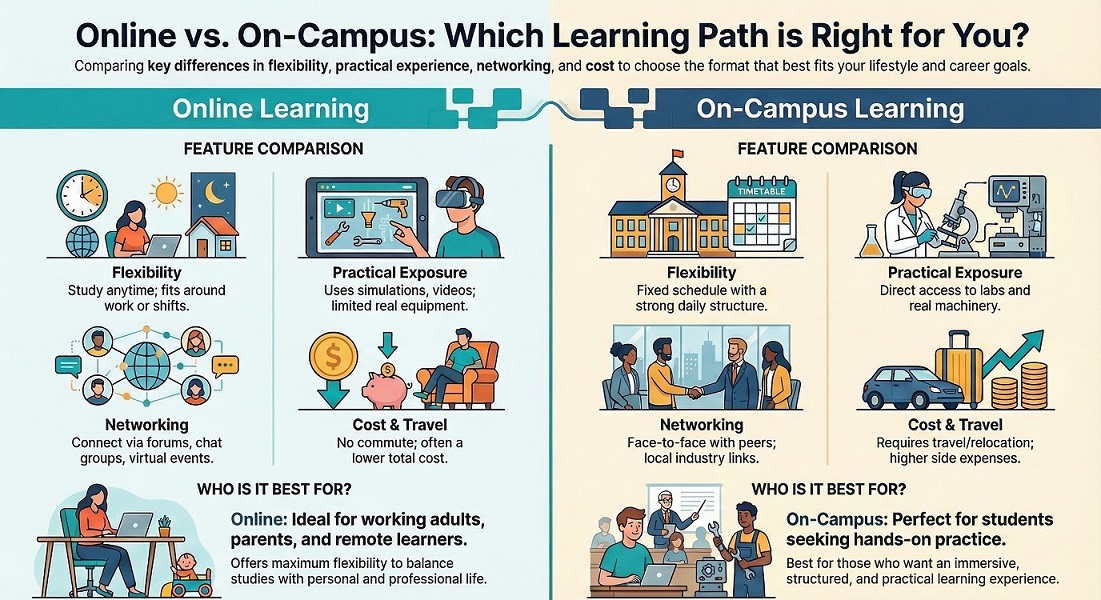
You also need to decide how you want to learn. Both online and on-campus formats work well, but they support different lifestyles. Hybrid models combine the best parts of each style.
You can think about the formats like this:
Online learning usually offers more flexibility for work, family, or shift patterns.
On-campus programs provide stronger access to real equipment and labs.
| Feature | Online Certificate | On-Campus Certificate |
|---|---|---|
|
Flexibility |
Very high; ideal for working adults |
Fixed timetable; suits full-time learners |
|
Practical Exposure |
Only a laptop and internet connection |
Requires travel or living near the campus |
|
Professional GMP Person Certification |
Simulations, videos, virtual labs |
Direct use of equipment, cleanroom tours |
|
Peer Networking |
Forums, chats, virtual groups |
Face-to-face contact, informal discussions, local events |
|
Best For |
Remote learners, busy professionals, parents |
Students seeking intensive practice and local industry ties |
Final words
A Certificate in Pharmaceutical Manufacturing gives you a fast, focused entry into GMP roles, often in just 6–12 months. It shows you understand EU GMP (EudraLex Volume 4), FDA cGMP (21 CFR 210/211) and WHO GMP in real shop-floor practice, not only on paper.
Meanwhile, the global pharma market moves toward USD 2 trillion by 2030, so companies urgently need people with practical GMP skills and strong documentation habits. You can turn this single certificate into your launchpad for growth and promotions when you plan your next steps and explore pharma career paths.
FAQs
This certificate suits pharmacy or science students, fresh graduates, lab technicians, and career changers who want to enter pharma. It also helps current operators who want a more formal qualification and stronger knowledge of GMP expectations.
After completing the certificate, you can apply for roles such as production operator, packaging technician, manufacturing assistant, or QA documentation support. With experience, you can move into senior operator, supervisor, or QA roles and combine the certificate with additional GMP or QMS training.
Most programs run 3–12 months.
Intensive options may finish in one semester.
Part-time or online formats spread learning over evenings or weekends.
References
Ershad Moradi, a Content Marketing Specialist at Zamann Pharma Support, brings 6 years of experience in the pharmaceutical industry. Specializing in pharmaceutical and medical technologies, Ershad is currently focused on expanding his knowledge in marketing and improving communication in the field. Outside of work, Ershad enjoys reading and attending industry related networks to stay up-to-date on the latest advancements. With a passion for continuous learning and growth, Ershad is always looking for new opportunities to enhance his skills and contribute to pharmaceutical industry. Connect with Ershad on Facebook for more information.

Pharma Jobs in Sydney in 2026: Salary, GMP and Hiring Trends
Sydney’s pharmaceutical sector continues to expand under strict TGA GMP inspection trends and PIC/S compliance Australia alignment. This article analyzes regulatory hiring growth, salary positioning, and compliance-driven career opportunities across manufacturing, quality assurance, and regulatory functions.

Quality Control (QC) in Pharma Industry: Top Strategies, Tests & Insights in 2026
Quality Control (QC) in the pharmaceutical industry is a vital process that ensures medicines meet stringent safety and quality standards. By detecting defects and contamination early, QC protects patients and supports regulatory compliance worldwide. Implementing strong QC systems safeguards the integrity and trustworthiness of pharmaceutical products.

Pharma Jobs in Melbourne in 2026: GMP Inspection and Salary Trends
Melbourne’s pharmaceutical sector continues to expand under strict TGA oversight. This analysis explores pharmaceutical manufacturing jobs Victoria, GMP inspection trends, salary benchmarks, and regulatory qualification pathways shaping compliance-driven career growth across sterile and biotech operations.