

Features
Topics
Discover

Unlock the potential of your career in the Pharma industry with our online courses and qualifications.

Career Path

Pick a career path, follow its guided course roadmap, and secure industry-verified credentials in a few months.

Courses

Earn career credentials from industry leaders that demonstrate your expertise.

Black Friday Sale: 50% OFF Annual Subscription – Nov 12 to Dec 1!

Pharmaceutical Management Certificate: Complete Guide to Programs, Skills & Career Outcomes in 2025

A pharmaceutical management certificate is a structured program that builds skills in strategy, regulation, and operations for medicine-focused businesses. This pharma certificate supports careers in an industry worth about 1.6 trillion dollars in 2023, with spending projected to exceed 2.8 trillion by 2033.

Demand grows because WHO projects an 11-million global health-worker shortfall by 2030, including pharmacists and managers worldwide.  Many courses run online worldwide. Many participants are fresh graduates, pharmacists moving into leadership, business or MBA students targeting life sciences, and executives from hospitals, biotech, and pharma suppliers who require formal proof of competence.

Table of Contents

What Is a Pharmaceutical Management Certificate?

A pharmaceutical management certificate gives focused training in pharma business, regulation, and leadership. It combines medicine basics, market access, finance, and marketing in one short program. Students learn how pharma companies work from lab to market.
Pharma management certification fills the gap between scientific degrees and pure business programs. First, a pharmaceutical business certificate focuses on job-ready skills, not long theory blocks.

  1. Core pharma knowledge, healthcare systems, and drug development steps.

  2. Business tools such as strategy, marketing, sales, finance, and project management. Many programs add skills like communication, negotiation, and team leadership.

However, certificates differ from full diplomas or degrees in depth and length. They often run for months, not years, so busy professionals keep working. Learners today update skills, prove expertise, and stay competitive in pharma markets.

Who Should Consider a Certificate in pharmaceutical management?

Many people can benefit from training in pharma and healthcare business. First, graduates in pharmacy or life sciences want strong career direction.
They learn how products move from research to market.
Moreover, they gain confidence to speak the language of management. Additionally, working professionals consider upskilling through short programs.
They balance jobs and family duties.

  • Early-career staff use a pharmaceutical business certificate to move into sales or marketing.
  • Mid-career pharmacists use it to shift toward strategy, market access, or product management.


Some learners want skills across hospitals, insurers, and public health.

  • People who love commercial roles choose a pharmaceutical business certificate.

  • People who prefer system-level planning select a healthcare management certificate.
    Both routes keep careers strong in pharma and healthcare.

From lab to launch: upgrade business, QA, and marketing skills with pharma-focused management training.
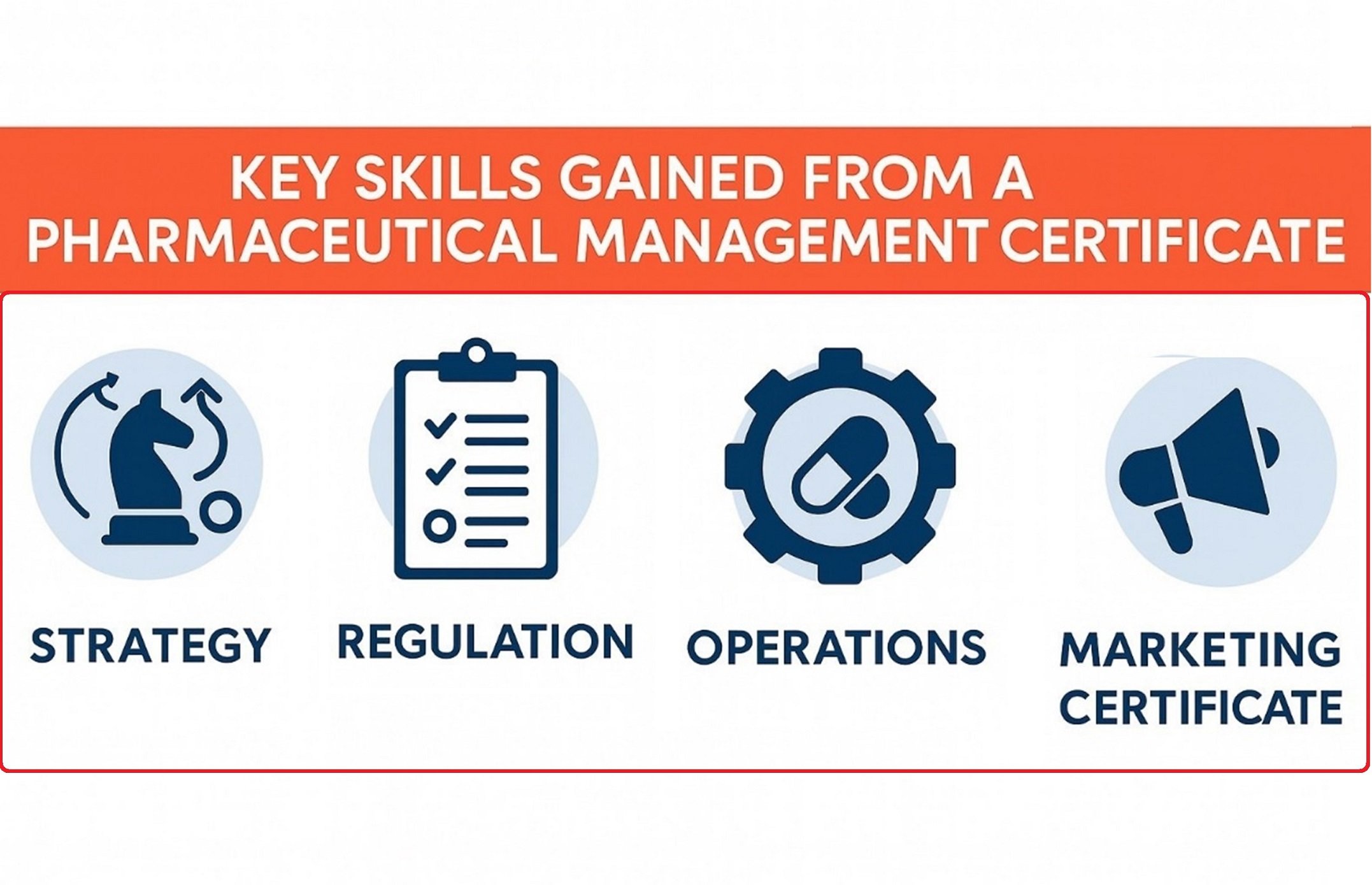
Build real pharma skills: strategy, regulation, operations, and marketing in one focused certificate

Types of Pharma Management Certificate Programs

Types of pharma management certificate programs focus on technical and core business topics.
Moreover, they help learners match training to pharma roles.

  • Quality assurance and GxP, clinical research, and regulatory affairs.

Programs support operations careers.

  • Supply chain, manufacturing, drug development, and pharma marketing.

Curriculum Overview (What You Study) in a Pharma Management Program

Top pharma management programs often group content into a set of subjects. First, many university or online certificates include around four to eight core courses.
Learners cover strategy, regulation, operations, and marketing in focused blocks. Programs often mix mandatory subjects with flexible electives for specialist paths. Additionally, public information from well-known providers shows similar structures worldwide.
Short graduate certificates may use four for-credit subjects, while executive courses use four intensive modules.   This pattern helps busy professionals plan time and budget. The comparison list and table below show how different schools organise subjects and teaching loads.

Provider / Program Level / Type Total “subjects”* Extra info
Graduate certificate (US)
4 courses
12 credits total
Executive certificate (LB)
4 modules
2 days per module (8 days)
Certificate program (AT)
4 modules
24 ECTS over 2 semesters

*“Subjects” here means distinct courses or modules in the curriculum.

Pharmaceutical Management Program Format, Duration & Fees

Program formats stay flexible for busy professionals. Many learners choose a pharmaceutical business certificate or healthcare management certificate online. Additionally, schools offer evening or weekend classes for working staff.

  • Typical duration ranges from 3 to 12 months

  • Programs include short bootcamps for intensive case-based learning

Tuition levels vary across regions and providers. Learners compare costs and match them with salary goals.

  • Public universities sometimes charge lower fees than private institutions

  • Employers may fund 1 course yearly as part of development

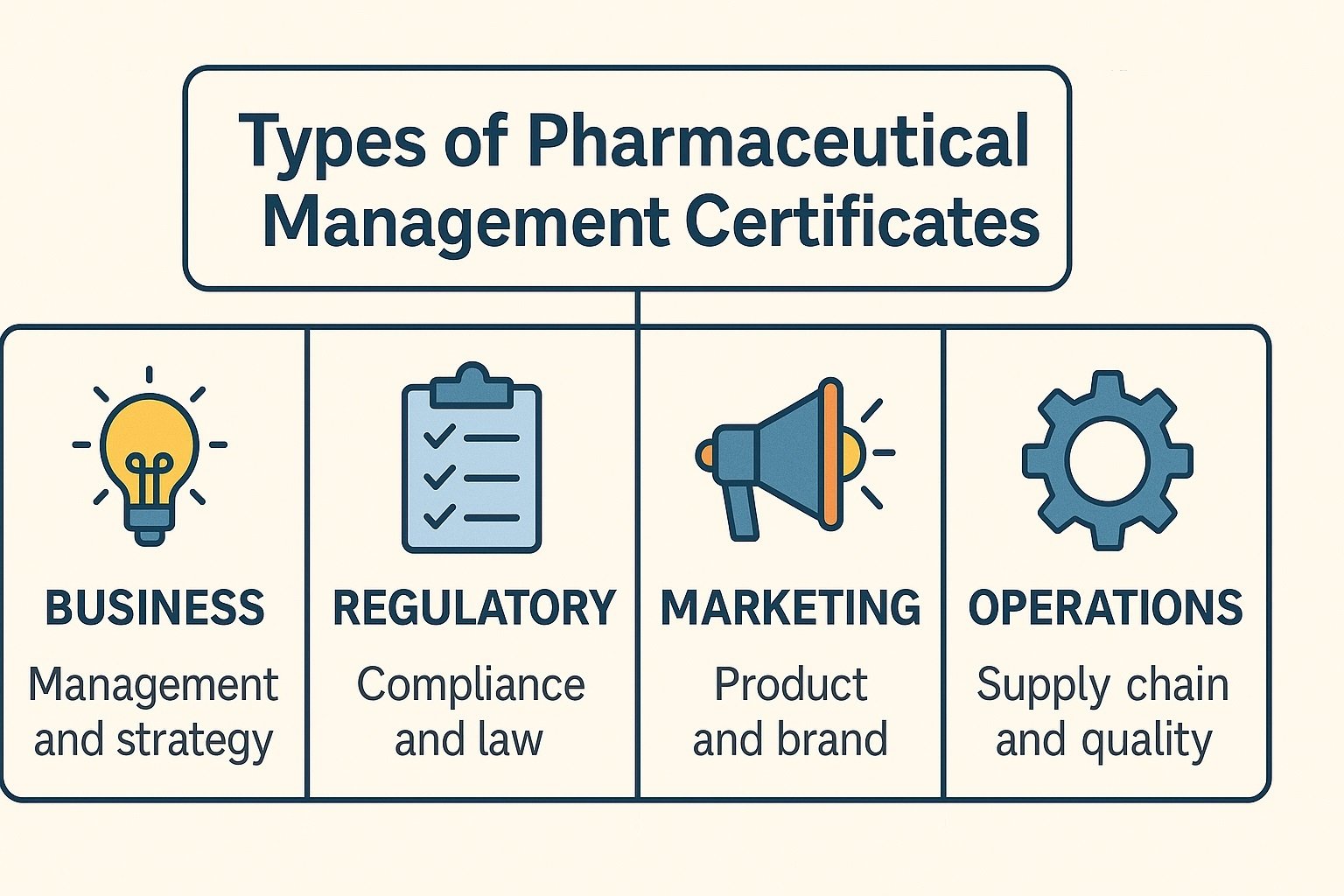
Map your growth: choose business, regulatory, marketing, or operations and specialise your pharma career.
One industry, four tracks: build targeted skills for strategy, compliance, brand, and supply chain

Career Opportunities After a Pharmaceutical Management Certificate

First, a certificate in pharmaceutical marketing opens roles in product, brand, and access teams. Many learners then move into sales, medical liaison, key account, or market research roles. Pharma leadership training helps experienced staff grow into team lead, manager, or director positions.

Additionally, a pharma operations certificate prepares people for planning, supply chain, and manufacturing roles. Holders coordinate production schedules, track inventory, and support GMP and logistics decisions. Career levels differ by experience and region, so candidates must check local benchmarks. Together, these paths create options from specialist positions to cross-functional leadership within pharma.

Comparative paths (illustrative example in Table bellow)


Provider / Program Level / Type Total “subjects”* Extra info
Graduate certificate (US)
4 courses
12 credits total
Executive certificate (LB)
4 modules
2 days per module (8 days)
Certificate program (AT)
4 modules
24 ECTS over 2 semesters

Final words

A pharmaceutical management certificate builds better focused skills in strategy, regulation, and marketing for healthcare. Additionally, they understand budgets, team coordination, and compliance duties in about 6 to 12 months.
This targeted option supports promotion without the time or cost of a full degree.

Moreover, learners can explore pharma career paths through other specialised programs. Pharma leadership training prepares supervisors to guide teams and manage change across departments. A pharma operations certificate strengthens planning, production efficiency, and daily supply decisions. A regulatory & quality management certificate improves audits and can cut errors by 25 percent.

FAQs:

1️⃣ How does a Pharmaceutical Certificate help a career?


Pharmaceutical certificates:

  • Prove focused skills to hiring managers and HR.
  • Help candidates switch from pure lab roles to business or regulatory roles.
  • Support promotions by showing leadership, compliance, or operations expertise.
  • Strengthen profiles for global jobs where employers ask for formal pharma training.
2️⃣ How long do pharmaceutical certificate programs usually take?

Most programs run from a few weeks to one year. Short online courses may last 4–12 weeks. University or executive certificates often run 6–12 months, part-time.

3️⃣ What subjects do pharmaceutical management programs cover?

Typical subjects include:

  • Drug development basics and regulatory pathways.

  • Marketing and market access for medicines.

  • Finance, forecasting, and portfolio strategy.

  • Supply chain, GMP, and quality topics.

References

Picture of Ershad Moradi
Ershad Moradi

Ershad Moradi, a Content Marketing Specialist at Zamann Pharma Support, brings 6 years of experience in the pharmaceutical industry. Specializing in pharmaceutical and medical technologies, Ershad is currently focused on expanding his knowledge in marketing and improving communication in the field. Outside of work, Ershad enjoys reading and attending industry related networks to stay up-to-date on the latest advancements. With a passion for continuous learning and growth, Ershad is always looking for new opportunities to enhance his skills and contribute to pharmaceutical industry. Connect with Ershad on Facebook for more information.

GMP vs GLP: Key Differences 2025 

GMP vs GLP often confuses pharma teams, yet both systems protect patients and products in different ways. This article explains the purpose, scope, and key differences with clear examples, tables, and regulatory references. Learn which guidelines apply to each activity and how to strengthen everyday compliance.

Read More »

Share