


Features
Topics
Discover

Unlock the potential of your career in the Pharma industry with our online courses and qualifications.

Career Path

Pick a career path, follow its guided course roadmap, and secure industry-verified credentials in a few months.

Courses

Earn career credentials from industry leaders that demonstrate your expertise.

Pharmacovigilance Consultants: Roles, Services, and Regulatory Value for Pharma 2026

In recent regulatory inspections, pharmacovigilance deficiencies remain one of the most frequently cited compliance gaps. Public FDA and EMA inspection data show that more than 30% of critical and major findings in recent years relate to safety reporting, signal management, or inadequate oversight of post-authorisation activities. In practice, these figures reflect how drug safety responsibilities intensify once products face real-world use and regulatory scrutiny. As expectations continue to rise, many organisations turn to pharmacovigilance consultants when internal teams face inspection pressure, system gaps, or rapid portfolio growth.
This role becomes even clearer when viewed alongside core Pharmacovigilance requirements that govern post-authorisation safety oversight.

Table of Contents

Who Are Pharmacovigilance Consultants and What Do They Do

Pharmacovigilance experts are specialised professionals who support companies in designing, operating, and improving drug safety systems across the post-authorisation phase. They work closely with regulatory, clinical, and quality teams to ensure that safety processes align with global requirements and evolving guidance.

Unlike temporary staff, these specialists bring an external perspective shaped by inspection experience and cross-market exposure. As a result, they help organisations translate complex regulatory expectations into practical, auditable workflows that perform under real operational pressure.

Why Pharma Companies Use Pharmacovigilance Consultants

Pharmaceutical companies engage pharmacovigilance consulting services for both strategic and operational reasons. Most importantly, these specialists help strengthen safety systems during periods of regulatory scrutiny or internal change.

Common drivers include:

  • Preparing for regulatory inspections or authority audits
  • Managing workload peaks after product launch
  • Addressing inspection findings or identified compliance gaps
  • Supporting expansion into new geographic markets
  • Compensating for limited internal PV resources

Because safety obligations continue throughout the product lifecycle, external drug safety consulting expertise often provides stability when internal teams face time, resource, or knowledge constraints.

Core Services Provided by Pharmacovigilance Consultants

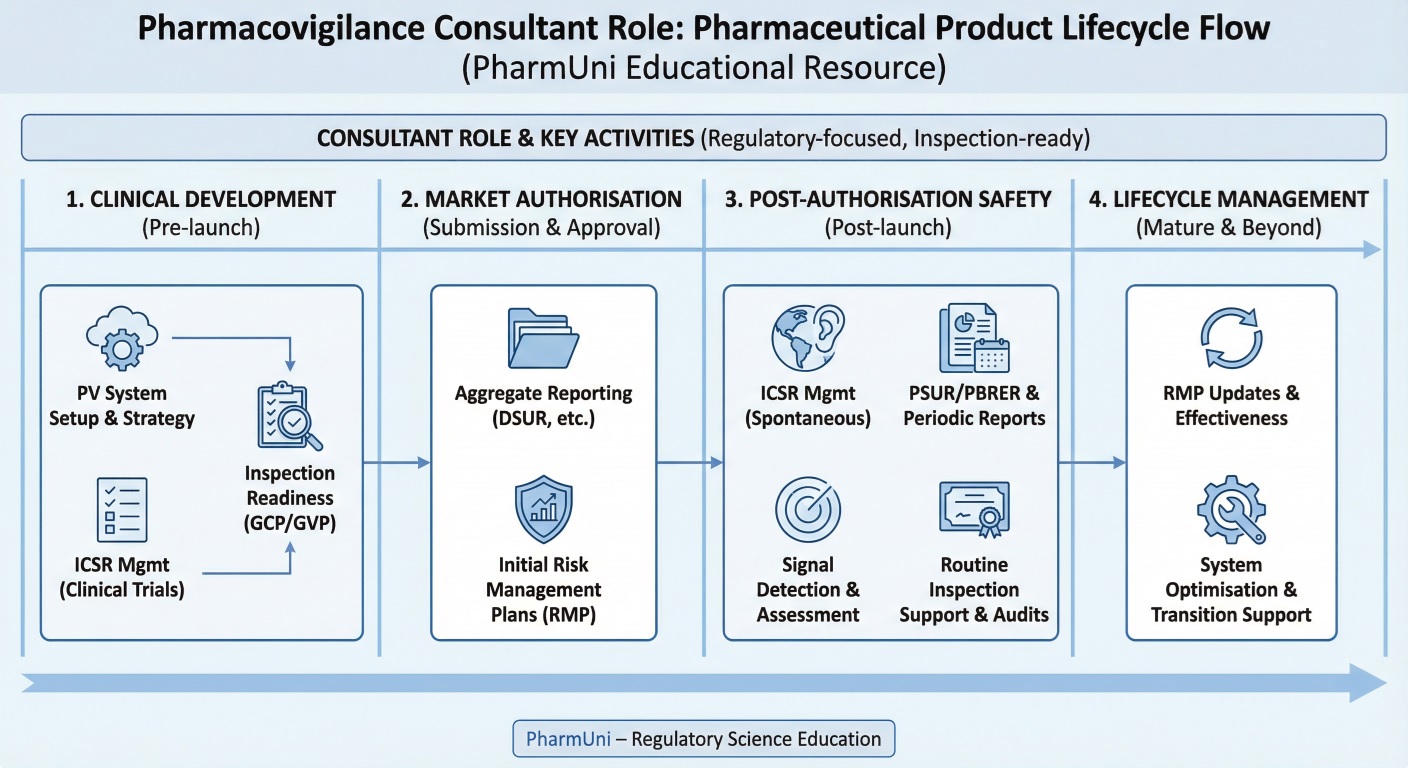
The visual below summarises how pharmacovigilance consulting services support drug safety across each stage of the product lifecycle.

The visual below summarises how pharmacovigilance consulting services support drug safety across each stage of the product lifecycle.
Pharmacovigilance consulting services turn safety data into clear decisions

Across the safety lifecycle, pharmacovigilance consulting services deliver structured support that reinforces both compliance and operational consistency.

Typical services include:

  • Design and maintenance of pharmacovigilance systems
  • ICSR processing and medical review oversight
  • Aggregate reporting support (PSUR, PBRER, DSUR)
  • Signal management and benefit–risk evaluation
  • Risk management plan development and lifecycle updates


During inspections, authorities often assess how these services interact in practice, not simply whether procedures exist on paper.

Core Services and Their Regulatory Value

Core Service Regulatory and Inspection Value
Pharmacovigilance system design and maintenance
Demonstrates structured safety governance and alignment with post-authorisation requirements
ICSR processing and medical review oversight
Reduces late-reporting findings and ensures medically sound case handling
Aggregate safety reporting (PSUR, PBRER, DSUR)
Supports continuous benefit–risk evaluation and regulatory transparency
Signal management and trend analysis
Enables early detection of emerging risks and proactive regulatory action
Risk management plan development and updates
Aligns safety controls with real-world data and inspection expectations

When to Engage External PV Expertise

Timing plays a critical role in safety outcomes. Organisations often involve specialised PV support during high-risk or transitional phases, such as:

  • First-in-country or first-in-class product launches
  • Regulatory inspections or authority audits
  • Detection of new or emerging safety signals
  • Mergers, acquisitions, or portfolio expansion
  • Internal restructuring or unexpected staff shortages

When companies engage early, they spend less time fixing findings after inspections and more time controlling safety risks upfront.

Regulatory Compliance and Inspection Support

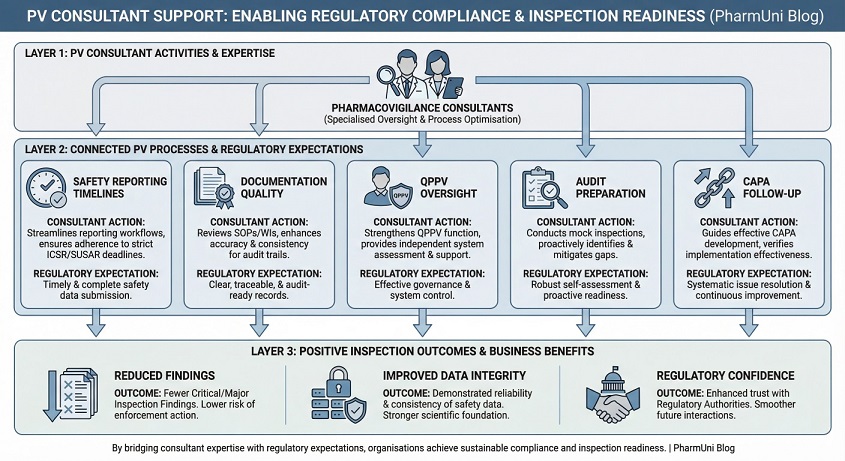
External safety specialists prepare organisations for inspections by reviewing documentation, testing processes, and aligning procedures with current regulatory guidance. They often conduct mock audits and targeted gap analyses to identify weaknesses before authorities do.

As a result, inspection teams enter audits with clearer roles, stronger documentation, and greater confidence when responding to inspector questions.

            We will discuss:

  • Safety Reporting and Case Management
  • Risk Management and Signal Detection
  • PV System Setup and Process Optimisation
  • Training and Knowledge Transfer

Safety Reporting and Case Management

Experienced drug safety professionals support case intake, triage, processing, and submission across regions. They ensure reporting timelines meet regulatory requirements and that case narratives reflect appropriate medical judgement.

Therefore, companies reduce the risk of late submissions, data quality findings, and inspection observations linked to safety reporting failures

Risk Management and Signal Detection

Specialised safety advisors assist with risk management plans, safety specifications, and structured signal tracking. They analyse trends across multiple data sources and recommend actions when benefit–risk profiles evolve.

This structured approach strengthens regulatory credibility and supports informed internal decision-making.

PV System Setup and Process Optimisation

From SOP development to vendor oversight, external PV professionals design scalable systems that support growth. They also streamline workflows to reduce manual errors and improve data flow between functions.

Consequently, organisations gain more efficient and inspection-ready safety operations.

Training and Knowledge Transfer

Beyond execution, external experts focus on building internal capability. They train teams on safety processes, regulatory expectations, and inspection behaviour.

Over time, this knowledge transfer strengthens internal ownership and supports long-term compliance sustainability.

PV Consulant Support
PV Consulant Support Levels

Regulatory Expectations When Using External PV Support

Regulators allow outsourcing but never transfer accountability. Authorities expect companies to:

  • Retain full oversight of outsourced safety activities
  • Maintain clear contracts and role definitions
  • Review external outputs on a regular basis
  • Document decision-making and escalation pathways
  • Demonstrate internal control during inspections

From a regulatory perspective, external support strengthens systems, but accountability always remains with the marketing authorisation holder.

Choosing the Right Safety Partner

Selecting the right partner directly affects safety and compliance outcomes. Key selection criteria include:

  • Proven inspection and audit experience
  • Familiarity with regional and global regulations
  • Strong medical and scientific background
  • Clear communication and documentation skills
  • Ability to integrate smoothly with internal teams

A well-matched partner improves both compliance outcomes and team confidence.

Final Words

Regulatory outcomes consistently highlight the cost of weak pharmacovigilance systems. Between 2020 and 2023, safety-related deficiencies contributed to a significant share of warning letters, inspection follow-ups, and regulatory actions in both the EU and the US often linked to delayed reporting or weak oversight that triggered enforcement actions. In this environment, pharmacovigilance consultants provide more than operational support. By strengthening compliance, improving inspection readiness, and supporting timely risk management decisions, they play a direct role in protecting patients and sustaining long-term regulatory confidence.

FAQs

1️⃣ How detailed should safety oversight be when external PV support is involved?

Authorities expect Marketing Authorisation Holders to maintain full governance over outsourced safety activities. Clear oversight, documented responsibilities, and regular review of outputs remain essential.

2️⃣ When do inspection findings justify engaging external PV expertise?


Findings related to late reporting, incomplete case assessment, weak signal management, or gaps in risk management plans often trigger the need for specialised external support before follow-up inspections.

3️⃣ How do consultants support compliance during safety audits?


They align case processing, reporting timelines, and documentation with regional requirements and help teams prepare for common inspection focus areas such as QPPV oversight and procedural consistency.

References

Picture of Mahtab Shardi

Mahtab Shardi

Mahtab is a pharmaceutical professional with a Master’s degree in Physical Chemistry and over five years of experience in laboratory and QC roles. Mahtab contributes reliable, well-structured pharmaceutical content to Pharmuni, helping turn complex scientific topics into clear, practical insights for industry professionals and students.

Good Manufacturing Practices in Malaysia

Good Manufacturing Practices in Malaysia: GMP Requirements and Compliance in 2026

In Malaysia, GMP compliance works as lifecycle-based regulatory oversight, not a simple checklist. Regulators assess quality system maturity, risk control, and day-to-day process control across the full production lifecycle. Therefore, manufacturers must align operations, staff competence, and documentation with inspection expectations to protect patient safety and supply reliability.

Read More »

Share