


Features
Topics
Discover

Unlock the potential of your career in the Pharma industry with our online courses and qualifications.

Career Path

Pick a career path, follow its guided course roadmap, and secure industry-verified credentials in a few months.

Courses

Earn career credentials from industry leaders that demonstrate your expertise.

Biotech Pharma Jobs in 2026: Top Roles, Skills, and How to Find Open Positions Faster

Biotech pharma jobs searches spike after budget resets and during big hiring waves. They also rise when professionals plan career moves. WHO says noncommunicable diseases cause 74% of global deaths, so biopharma keeps funding new therapies.

In this guide to Pharma Jobs, you’ll learn meaning, top roles, and the skills recruiters screen first, with examples you can copy. You’ll also get shortcuts: combine role , level , location, then add remote or hiring. WHO estimates almost 2 billion people lack regular access to essential medicines, so demand for quality, regulatory, and clinical talent stays strong. 

Table of Contents

What Are Biotech Pharma Jobs?

Biotech jobs build, test, and deliver therapies, vaccines, and diagnostics. Teams work across research, clinical trials, quality, manufacturing, and regulatory submissions. Therefore, these roles mix science with strict compliance and strong documentation habits.

You can start in labs, plants, or offices, depending on your background. Employers hire for skills like GMP basics, data accuracy, teamwork, and clear writing. Next, use job-family keywords to search faster and smarter:

  • R&D roles discover targets, run assays, and analyze results.

  • Quality and RA roles prevent errors, manage changes, and support approvals.

How Biotech Jobs Differs from General Healthcare Jobs

Biotech and pharma jobs focus on making products, not treating patients directly. Teams build medicines, run trials, and support approvals. They follow strict rules, write detailed records, and manage risk every day.

However, general healthcare jobs focus on care delivery and patient outcomes. Biotech and pharma roles focus on processes, data, and compliance. Key differences include:

  • Work with GMP, SOPs, and audits.

  • Use validation, batch records, and change control.

  • Track quality metrics and deviation trends.

High-demand roles inside biotech/pharma

Biotech and pharma companies hire fast when pipelines grow and launches start. These roles protect patient safety and keep projects moving. So, you can target job families and search smarter.

High-demand roles include:

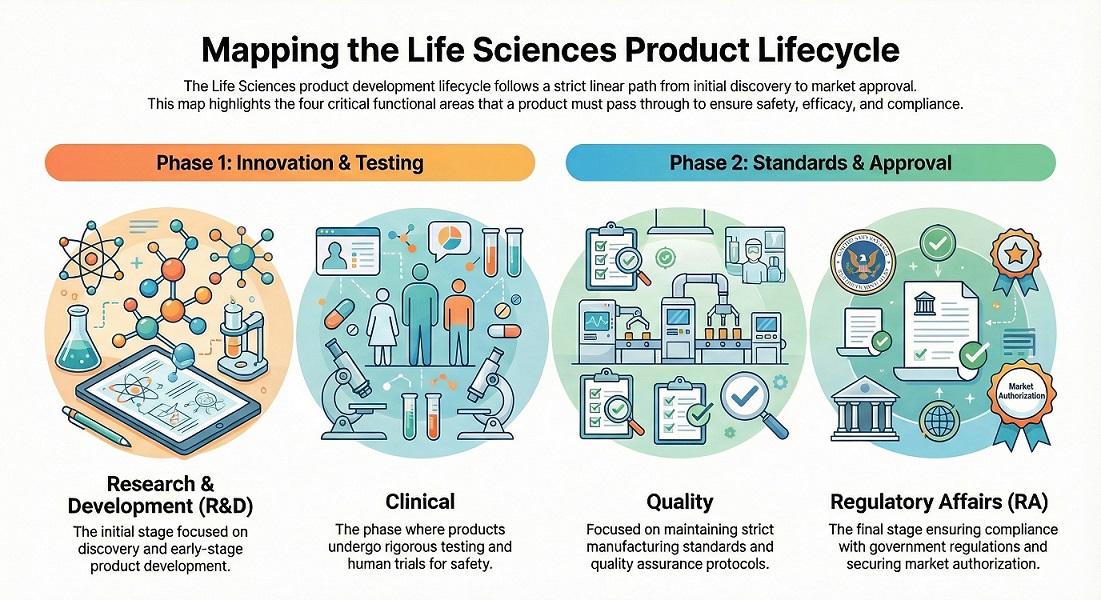
  1. Research & Discovery (R&D) in biotech: run experiments, analyze data, and select targets.

  2. Clinical Development & Clinical Operations in biotech: plan trials, manage sites, and track timelines.

  3. Quality (QA + QC) in biotech: test batches, review records, and prevent defects.

  4. Regulatory Affairs (RA) in biotech: prepare submissions, manage changes, and support approvals.

Biotech/Pharma Job Map: R&D → Clinical → Quality → RA
Biotech/Pharma Job Map: R&D , Clinical , Quality and RA

1-Research & Discovery (R&D) in biotech

R&D roles in biotech discover new drug targets and test early ideas. Teams run lab experiments, analyze results, and choose the best candidates. Therefore, you need strong science basics and clean data habits.

Typical R&D tasks include:

  • Design assays, run experiments, and document findings.

  • Analyze datasets, present insights, and recommend next steps.

2-Clinical Development & Clinical Operations in biotech


Clinical Development and Clinical Operations plan trials and keep them on track. Teams protect patients, manage data quality, and hit timelines. Therefore, you need strong coordination skills and clear communication.

Common work includes:

  • Build trial plans, protocols, and study timelines.

  • Select sites, support investigators, and train staff.

  • Track enrollment, monitor risks, and solve issues fast.

  • Review data queries, ensure consistency, and document actions.

  • Coordinate vendors, manage budgets, and report progress.

3-Quality (QA + QC) in biotech

Quality roles protect patients by preventing errors and defects. QA sets rules, while QC tests materials and batches. Therefore, you must follow SOPs and document every step.

Key QA + QC work includes:

  • Review batch records, deviations, and CAPA actions.

  • Test samples, validate methods, and trend results.

  • Support audits, manage change control, and release products.

4-Regulatory Affairs (RA) in biotech

Regulatory Affairs in biotech drives biologics and gene therapies toward approval. Teams plan IND/CTA filings, align CMC data, and run agency meetings.

Therefore, RA focuses on potency, comparability, and viral safety. It supports BLA/MAA submissions and lifecycle changes.

  • Write eCTD modules and CMC summaries for review.

  • Coordinate labeling, claims, and risk plans across teams.

  • Track global ATMP and orphan pathways.

Biotech job family

Job family What you do Typical entry roles (biotech)
Research & Discovery (R&D)
Run assays, analyze data, document experiments
Research Assistant, Research Associate I, Lab Technician
Clinical Operations
Support trial setup, manage TMF, track sites and timelines
Clinical Trial Assistant (CTA), TMF Specialist, Clinical Ops Associate
Quality (QA + QC)
Review records, test samples, manage deviations and trends
QA Associate, QC Analyst I, Microbiology Technician
Manufacturing (GMP Operations)
Execute batch steps, follow SOPs, complete batch records
Manufacturing Associate I, GMP Technician, Production Operator
Regulatory Affairs (RA)
Support submissions, track commitments, coordinate responses
RA Associate, Submission Coordinator, Labeling Assistant

What Skills Do Biotech and Pharma Employers Screen First?

Recruiters screen for compliance habits because FDA inspects hard and often. FDA runs about 12,000 domestic and 3,000 foreign inspections yearly.  FDA issued 105 drug-quality warning letters in FY2024.  FDA also raised inspection-based letters by 21% in FY2024 alone. 

Therefore, employers want people who prevent findings and protect product quality. Show these skills on resumes, interviews, and work samples:

  • Write clear SOPs, records, and deviations.

  • Follow GMP, CAPA, and change control.

  • Check data accuracy and audit trails.

Where to Find Biotech Pharma Jobs Faster

Find biotech and pharma jobs faster by using the right search channels and keywords. Start with role + level + location, then add “hiring” or “remote.” Use biotech job boards, LinkedIn, and company career pages. Set alerts and apply early, since teams fill roles quickly. Track 10 target companies and review new posts daily.

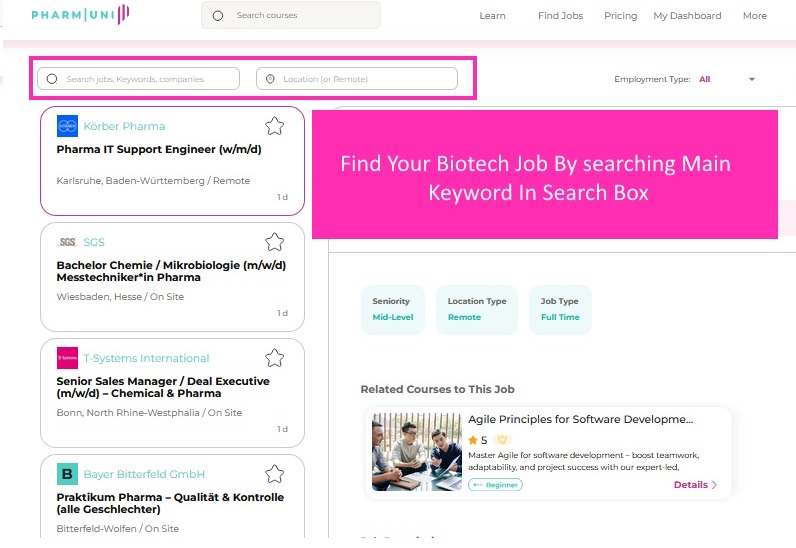
Also, use Pharmuni and click Explore Pharma Jobs for focused listings. Filter by job family, location, and work style to save time. Then match your keywords to the job description and tailor your resume fast. Keep a simple tracker to follow applications and interviews.

Biotech Job
Biotech and Pharma Job Searching in Pharmuni

Top High-Demand Bio Pharma Jobs and Their Responsibilities

Employers screen for GMP mindset, clean documentation, and strong teamwork. They also check data accuracy and problem-solving under pressure. Therefore, show proof with projects, clear writing, and measurable results. Use keywords like SOP, CAPA, deviation, and validation. Then match these skills to the job family you target.

Filter biotech pharma jobs by work style before you apply. Remote roles fit writing, data, and some regulatory work best. Hybrid roles often suit clinical operations and project management. On-site roles dominate manufacturing, QC labs, and many validation tasks. Use filters for location, shift, and travel.

Remote biotech vs remote pharma: what’s realistic

Remote biotech jobs stay limited because labs need hands-on work. Pharma offers more remote roles in writing, data, and compliance.

However, EU regulation runs across borders, so companies use distributed teams. EMA draws on over 4,000 specialists across Europe.

  • Target RA, PV, medical writing, and analytics for remote work.

  • Expect manufacturing, QC labs, and process development to stay on-site.

Final Words

Biotech pharma jobs span R&D, clinical, quality, and regulatory work across the product lifecycle. Hiring spikes after budget resets and before trial or launch milestones. Employers expect ICH Q10 quality systems and ICH Q9(R1) risk thinking to show in daily work. Regulators keep pressure high: FDA reports ~12,000 domestic and ~3,000 foreign inspections yearly. 

Final words: pick one track, then prove two skills—documentation and data accuracy. Use ICH E6(R3) to speak “GCP” in clinical roles. Build a keyword formula: role , level , city , and remote. Apply weekly, track outcomes, and iterate fast. 

FAQs

1️⃣ What skills do employers screen first?

They want strong documentation, data accuracy, and risk thinking.
They also expect quality systems knowledge, like ICH Q10 and ICH Q9(R1)

2️⃣ Which roles fit remote work bes in biotecht?

Target regulatory affairs, medical writing, and clinical data roles.
Expect labs, QC, and GMP production to stay on-site.

3️⃣ How do I search faster for biotech jobs?

Use: role + level + city + “hiring” + “remote”.
Then set alerts and apply within 24–72 hours.

References

Picture of Ershad Moradi

Ershad Moradi

Ershad Moradi, a Content Marketing Specialist at Zamann Pharma Support, brings 6 years of experience in the pharmaceutical industry. Specializing in pharmaceutical and medical technologies, Ershad is currently focused on expanding his knowledge in marketing and improving communication in the field. Outside of work, Ershad enjoys reading and attending industry related networks to stay up-to-date on the latest advancements. With a passion for continuous learning and growth, Ershad is always looking for new opportunities to enhance his skills and contribute to pharmaceutical industry. Connect with Ershad on Facebook for more information.

Share