
Features
Topics
Discover

Unlock the potential of your career in the Pharma industry with our online courses and qualifications.

Career Path

Pick a career path, follow its guided course roadmap, and secure industry-verified credentials in a few months.

Courses

Earn career credentials from industry leaders that demonstrate your expertise.

USP 797 Compliance: Practical Requirements for Sterile Compounding in 2026

In 2012, a multistate fungal meningitis outbreak linked to contaminated compounded medications sickened nearly 800 individuals and resulted in at least 64 deaths, highlighting why USP 797 Compliance remains central to sterile compounding oversight today. Despite tighter enforcement, fewer than 40% of hospital pharmacies report full alignment with USP 797 requirements, with inspections frequently identifying gaps in environmental monitoring, aseptic technique, and documentation.

For pharmacists, pharmacy students, and quality professionals, USP 797 is enforced as a practical inspection standard rather than a theoretical guideline. This article explains how sterile compounding requirements are applied in real pharmacy settings, where inspection pressure concentrates, and how compliance is demonstrated within broader pharma quality management systems.

Table of Contents

What is USP 797 compliance

USP 797 compliance refers to the implementation and ongoing verification of contamination control systems for sterile compounding. It defines enforceable standards inspectors use to assess whether pharmacy operations can consistently prevent microbial and particulate contamination during routine conditions.

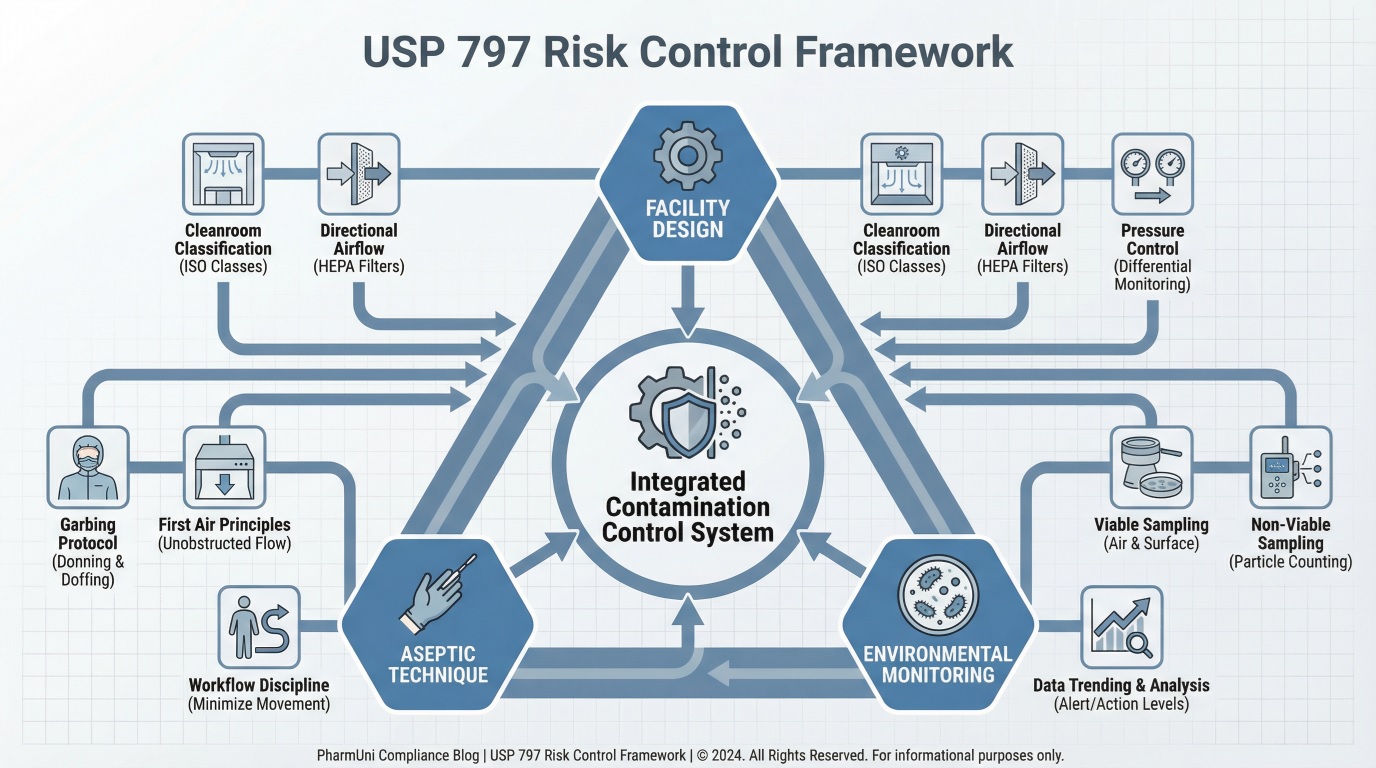
From a QA/QC perspective, USP 797 functions as a process-control framework rather than a facilities-only requirement. Compliance depends on the alignment of facility design, aseptic technique, personnel qualification, environmental monitoring, and beyond-use dating (BUD) as an integrated system.

During inspections, regulators evaluate whether these controls remain in a sustained state of control, supported by objective evidence such as trendable monitoring data, current competency records, and documented corrective actions. Gaps between written procedures and observed practice remain a primary source of inspection findings.

How Does USP 797 Work? (Step-by-Step Procedure)

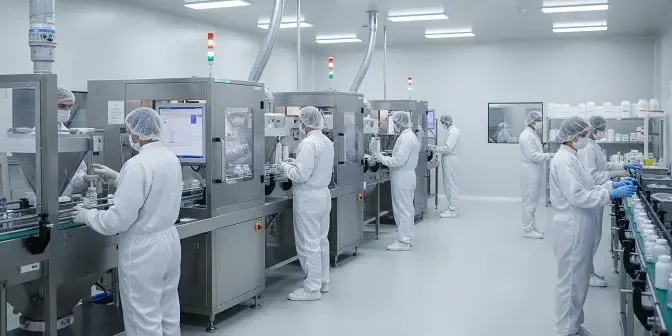
USP 797 compliance starts with designing and maintaining the proper cleanroom environment. This includes meeting ISO class 5 cleanroom requirements, using primary engineering controls like laminar airflow workbenches, and secondary engineering controls such as buffer rooms and ante areas. Each area must follow specific airflow, particle count, and pressure requirements.
Next, staff must undergo compounding personnel training. This includes proper gowning, aseptic technique step-by-step guides, and ongoing evaluations. Regular gloved fingertip testing and media-fill testing procedures help verify competency. Monitoring includes environmental sampling and beyond-use date determination for CSPs. Cleanroom standards must be maintained at all times to avoid contamination and maintain compliance.

Key risk areas defined by USP 797 for sterile compounding

USP 797 concentrates on operational risk areas that most directly affect contamination risk and inspection outcomes. Rather than focusing only on facility design, inspections evaluate how sterile compounding activities are classified, controlled, and executed under routine operating conditions.

USP 797 Risk Control Framework

The following risk areas form the core of USP 797 inspection expectations:

  • Scope of sterile compounding activities under USP 797
  • Compounding risk categories and associated controls
  • Personnel responsibilities and aseptic technique requirements
  • Common inspection findings and compliance gaps

Scope of sterile compounding activities under USP 797

USP 797 requirements apply to any pharmacy activity involving the preparation of sterile medications, including injections, infusions, ophthalmic products, and compounded sterile preparations prepared for patient administration. Even limited manipulations such as vial reconstitution or syringe transfers—are considered part of sterile compounding operations.

From an inspection perspective, clear scope definition is essential for sterile compounding compliance. Inspectors frequently identify deficiencies when pharmacies underestimate the scope of their compounding activities and apply pharmacy compounding standards or controls that do not match the actual contamination risk. Misclassification at this stage often leads to downstream gaps in environmental monitoring and beyond-use dating.

Compounding risk categories and associated controls

Sterile compounding activities are grouped into defined compounding risk categories, which determine required facility controls, aseptic technique expectations, and limits for beyond-use dating (BUD). These categories are designed to align operational complexity with appropriate sterile compounding controls.

During a USP 797 inspection, regulators assess whether documented risk categorization is consistently reflected in cleanroom practices, environmental monitoring programs, and process controls. Compliance gaps commonly occur when written classifications are not supported by actual workflows or monitoring data, rather than from misunderstanding the categories themselves.

Personnel responsibilities and aseptic technique requirements

Personnel performance remains one of the most closely examined elements of sterile compounding compliance. Pharmacists and technicians are expected to demonstrate consistent aseptic technique, proper garbing, hand hygiene, and adherence to defined compounding workflows.

USP 797 inspection practices frequently include direct observation of live compounding. Minor deviations such as improper glove disinfection or workflow interruptions can trigger findings if they indicate weaknesses in training, competency assessment, or ongoing supervision. Inspection readiness under USP 797 depends heavily on whether aseptic practices remain reliable during routine workload conditions.

Common inspection findings and compliance gaps

Common findings during USP 797 inspections often involve incomplete environmental monitoring records, inconsistent application of beyond-use dating, outdated personnel training documentation, and missing or ineffective corrective actions. These deficiencies typically point to systemic weaknesses in pharmacy compounding standards rather than isolated errors.

Regulators expect pharmacies to identify trends, investigate deviations, and document preventive actions as part of continuous sterile compounding control. Facilities that treat inspections as periodic events rather than as reflections of daily practice are more likely to experience repeated compliance gaps.

USP 797 inspection practices frequently include direct observation of live compounding. Minor deviations such as improper glove disinfection or workflow interruptions can trigger findings if they indicate weaknesses in training, competency assessment, or ongoing supervision. Inspection readiness under USP 797 depends heavily on whether aseptic practices remain reliable during routine workload conditions.

Core requirements of USP 797

Sterile compounding control depends on integrating technical safeguards with procedural discipline.

Key requirements include:

  • Controlled cleanroom design and airflow management
  • Qualified aseptic technique and personnel competency
  • Routine environmental monitoring
  • Risk-based beyond-use dating
  • Documented SOPs, investigations, and corrective actions

A failure to integrate these elements consistently is a common source of deficiencies that directly affect USP 797 Compliance across sterile compounding operations.

Facility, environmental, and process controls

Facility design, monitoring, and procedures function as a single system.

Control area Purpose Inspection focus
Cleanroom design
Physical contamination control
Airflow, pressure differentials
Environmental monitoring
Detect microbial trends
Frequency, data review
Aseptic workflows
Prevent touch contamination
Technique observation
Gloved Fingertip & Media Fill Tests
Documentation
Traceability and consistency

Inspectors expect pharmacies to review and act on monitoring data not merely collect it.

How pharmacies demonstrate compliance in practice

Short answer: Pharmacies demonstrate control through consistent evidence, not stated intent.

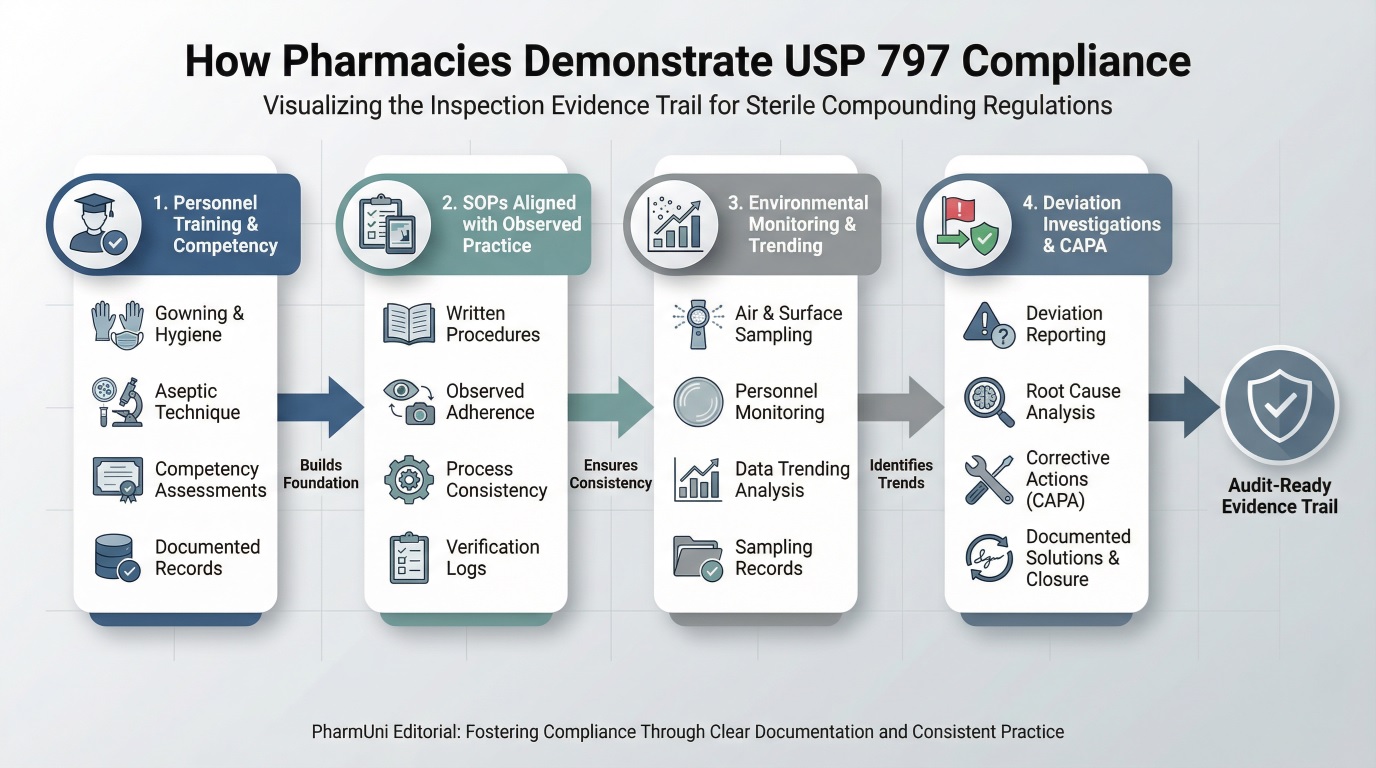
How Pharmacies Demonstrate USP 797 Compliance

Inspection readiness relies on:

  • Environmental monitoring records with documented review
  • Personnel training and requalification data
  • SOPs aligned with observed practice
  • Deviation investigations and corrective actions
  • Clear linkage between risk category, controls, and BUD

Pharmacies that rely on documentation alone without operational consistency often struggle to demonstrate USP 797 Compliance during inspections.

Final Words

Across recent inspection cycles, FDA and NABP reports consistently indicate that process-related deficiencies particularly in documentation, personnel qualification, and environmental monitoring account for the majority of sterile compounding findings, even in facilities that meet physical design standards. USP 797 Compliance functions as a patient-safety and risk-control system because it requires pharmacies to maintain contamination controls continuously across inspection cycles, not assemble evidence only when an audit is imminent. In practice, inspection outcomes depend on whether aseptic technique, monitoring data, and records remain reliable during routine operations under real workload pressure.

FAQs

1️⃣ Which USP 797 requirements are most likely to trigger inspection findings?

Inspection findings most often stem from gaps in aseptic technique, incomplete environmental monitoring data, inconsistent beyond-use dating, and missing personnel competency records within sterile compounding operations.

2️⃣ Why do facilities with compliant cleanrooms still receive inspection citations?

Because inspections focus on whether sterile compounding processes such as training, monitoring, and workflow discipline remain reliable during routine medication preparation, not just on cleanroom design or initial qualification.

3️⃣ What is the fastest way to reduce inspection risk in sterile compounding settings?

Keeping training records current, trending environmental monitoring results, and ensuring aseptic technique is consistently followed during real workload conditions not only during audits or validations.

Picture of Mahtab Shardi

Mahtab Shardi

Mahtab is a pharmaceutical professional with a Master’s degree in Physical Chemistry and over five years of experience in laboratory and QC roles. Mahtab contributes reliable, well-structured pharmaceutical content to Pharmuni, helping turn complex scientific topics into clear, practical insights for industry professionals and students.

Share