Soham R completed this course and earned a Pharmuni certificate.
Aggregate Report Writing in Pharmacovigilance
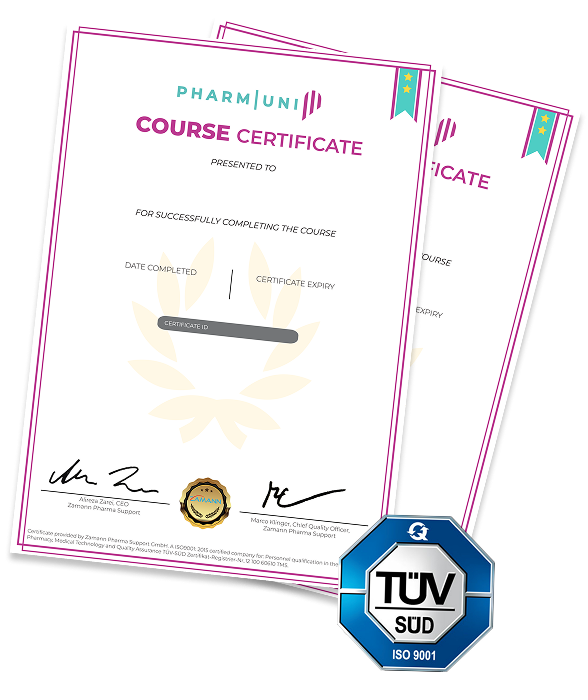
ISO 9001
Quality Management System
Certificate Registration No.: 12 100 60610 TMS
About the Aggregate Report Writing in Pharmacovigilance
Aggregate Report Writing in Pharmacovigilance introduces the advanced knowledge and applied strategies needed to plan, write, and review aggregate safety reports for medicinal products. This course explains how reports such as PSURs, PBRERs, and DSURs support ongoing pharmacovigilance by bringing together safety data over time and helping regulators assess whether a medicine’s benefits continue to outweigh its risks.
You will gain a practical understanding of the foundations of aggregate reporting, the differences between major report types, benefit–risk evaluation methods, regulatory submission planning, and cross-functional coordination. The course explores regional regulatory expectations, data cut-off dates and database lock points, consistency across periodic reports, quality control, and how signal detection findings and regulatory feedback are incorporated into future reporting cycles.
The course focuses on key aspects of aggregate reporting in practice, including:
• The purpose and structure of PSURs, PBRERs, and DSURs
• How to perform and present a structured benefit–risk evaluation
• How to plan submission timelines and coordinate multi-region reporting activities
• How to apply quality control and respond to regulatory feedback in aggregate reporting workflows
Through structured explanations and practical examples, this course helps you understand how high-quality aggregate reports support compliance, transparency, and ongoing benefit–risk evaluation in pharmacovigilance. It is best suited to professionals working in pharmacovigilance, medical writing, regulatory affairs, or related roles who want to strengthen their skills in advanced aggregate reporting.
Upon successful completion of this course, the learner has demonstrated the ability to:
Learning Objective 1
Compare PSUR, PBRER, and DSUR formats, content expectations, and regulatory purposes
Learning Objective 2
Evaluate pharmacovigilance safety data for balanced benefit–risk assessment
Learning Objective 3
Plan EMA, FDA, and PMDA submission timelines for aggregate reports
Learning Objective 4
Coordinate RA, QA, Clinical, PV, and Medical Writing inputs for regulatory reports
Learning Objective 5
Use quality checks to prevent reporting errors and compliance gaps in periodic safety submissions
Learning Objective 6
Incorporate signal detection outcomes into PSURs, PBRERs, and DSURs for inspection-ready periodic reports
Learning Objective 7
Adjust aggregate reporting strategies based on EMA/FDA authority feedback to support compliance and future submissions