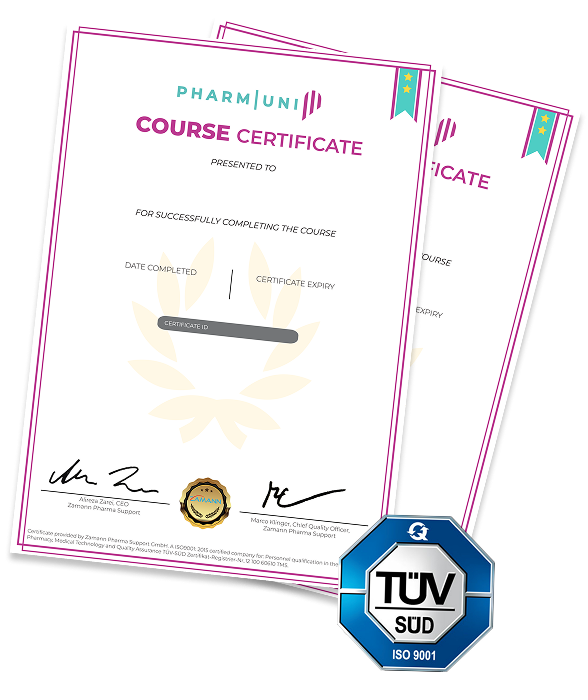
Andressa M completed this course and earned a Pharmuni certificate.
Introduction to Good Documentation Practices (GDocP)
ISO 9001
Quality Management System
Certificate Registration No.: 12 100 60610 TMS
About the Introduction to Good Documentation Practices (GDocP)
Dive into the foundations of Good Documentation Practices (GDocP) in the pharmaceutical and life sciences industries. The course explains why documentation is a cornerstone of data integrity, product quality, and regulatory compliance in GxP environments, and how GDocP supports reliable, traceable, and trustworthy records.
You will gain a clear understanding of how GDocP relates to GMP, ISO standards, and regulatory expectations, and why accurate, contemporaneous, and controlled documentation is essential for audits, inspections, and routine operations.
The course focuses on key elements of GDocP in practice, including:
• The ALCOA and ALCOA+ principles of data integrity
• How Document Control manages the lifecycle of controlled documents
• How to create, correct, and maintain compliant records in everyday work
Through practical explanations and workplace examples, this course helps learners understand what good documentation looks like in real GxP environments, why it matters, and how their own record-keeping affects quality and compliance. It is best suited to professionals who need a clear foundational understanding of documentation requirements in regulated work.
Upon successful completion of this course, the learner has demonstrated the ability to:
Learning Objective 1
Recognize why Good Documentation Practices matter in pharmaceutical and life sciences settings
Learning Objective 2
Use effective documentation practices to support regulatory compliance
Learning Objective 3
Create records that are clear, accurate, and reliable
Learning Objective 4
Identify documentation’s role in quality assurance, audits, and data integrity
Learning Objective 5
Support effective documentation systems across product development, manufacturing, and traceability