Svetlana A completed this course and earned a Pharmuni certificate.
Six Sigma White Belt
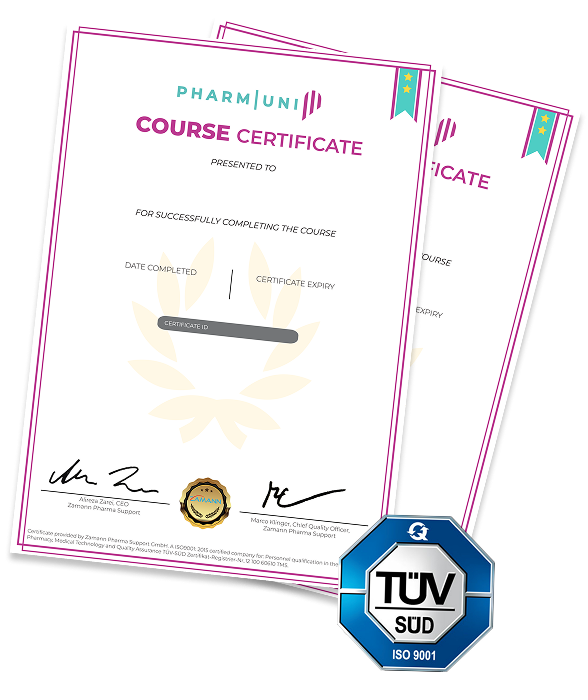
ISO 9001
Quality Management System
Certificate Registration No.: 12 100 60610 TMS
About the Six Sigma White Belt
Six Sigma White Belt introduces the core principles, terminology, and structured thinking used in Six Sigma process improvement. This course explains how Six Sigma helps organizations reduce variation, improve consistency, and support continuous improvement, while giving beginners a practical starting point for understanding quality-focused problem solving.
You will gain a practical understanding of key Six Sigma concepts such as variation, defects, yield, sigma levels, and the DMAIC framework. The course explores the origins and purpose of Six Sigma, related improvement approaches such as Lean and TQM, core metrics such as DPMO and DPU, principles like data-driven decision-making and Voice of the Customer, and the different roles involved in Six Sigma projects, including how White Belts support improvement culture.
The course focuses on key aspects of Six Sigma at White Belt level, including:
• The purpose, language, and practical value of Six Sigma
• Sigma levels, yield, variation, and basic process performance concepts
• The DMAIC framework and foundational improvement principles
• The structure of Six Sigma teams and the role of White Belts in improvement work
Through structured explanations and practical examples, this course helps learners build confidence in the fundamentals of structured process improvement without requiring advanced technical knowledge. It is best suited to beginners, team members supporting quality initiatives, and professionals who want a practical introduction to Six Sigma thinking.
As a White Belt course, this training focuses on awareness and understanding, not advanced technical analysis. By the end of this course, you will be able to:
Learning Objective 1
Define Six Sigma and explain its core purpose and benefits within an organization.
Learning Objective 2
Describe the meaning of sigma levels and the significance of reducing variation.
Learning Objective 3
Identify key terms, roles, and methodologies used in Six Sigma projects.
Learning Objective 4
Recognize the DMAIC framework and the role of data in continuous improvement.
Learning Objective 5
Compare Six Sigma with other process improvement methodologies such as Lean and TQM.
Learning Objective 6
Explain how Six Sigma contributes to a culture of continuous improvement.