Naomi V completed this course and earned a Pharmuni certificate.
Introduction to Pharmacovigilance
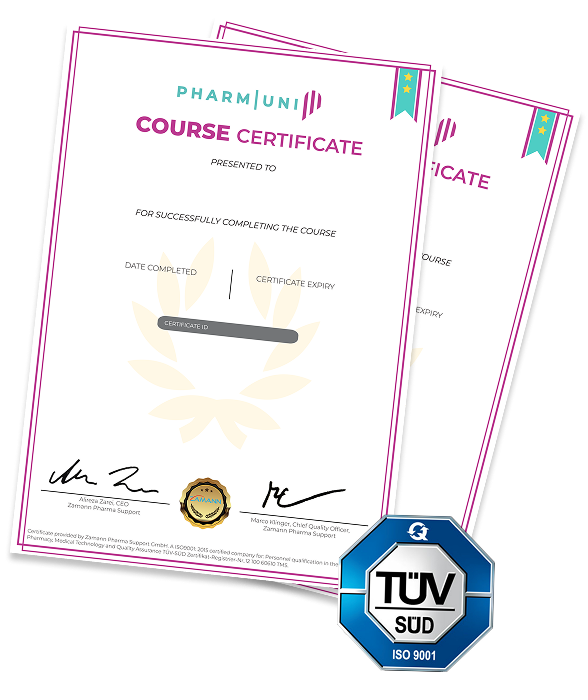
ISO 9001
Quality Management System
Certificate Registration No.: 12 100 60610 TMS
About the Introduction to Pharmacovigilance
Pharmacovigilance plays a critical role in protecting patient safety throughout the lifecycle of medicinal products. This course provides a structured introduction to the principles, regulatory framework, and operational processes that underpin pharmacovigilance activities in the pharmaceutical industry.
You will gain a clear understanding of how adverse events are identified, reported, evaluated, and monitored, as well as how pharmacovigilance systems support ongoing benefit–risk assessment and regulatory compliance.
The course focuses on key pharmacovigilance concepts in practice, including:
• The purpose and regulatory basis of pharmacovigilance
• Adverse event reporting and case processing principles
• Roles and responsibilities within a pharmacovigilance system
• Ongoing safety monitoring and benefit–risk evaluation
Through structured explanations and practical examples, this course helps learners understand how pharmacovigilance activities contribute to patient safety and regulatory oversight. It is best suited to professionals who require a foundational understanding of pharmacovigilance processes within regulated environments.
Upon successful completion of this course, the learner has demonstrated the ability to:
Learning Objective 1
Define pharmacovigilance’s role in patient safety and regulatory compliance under EMA, FDA, and ICH expectations
Learning Objective 2
Distinguish between AEs, ADRs, and product quality complaints in safety information handling
Learning Objective 3
Identify key pharmacovigilance data sources and their contribution to safety monitoring
Learning Objective 4
Relate pharmacovigilance activities to quality systems, inspection readiness, and cross-functional collaboration
Learning Objective 5
Apply adverse-event reporting requirements for timelines, documentation, and data protection
Learning Objective 6
Recognize professional behaviors that support ethical communication and timely safety reporting