Michael C completed this course and earned a Pharmuni certificate.
Introduction to Good Manufacturing Practices (GMP)
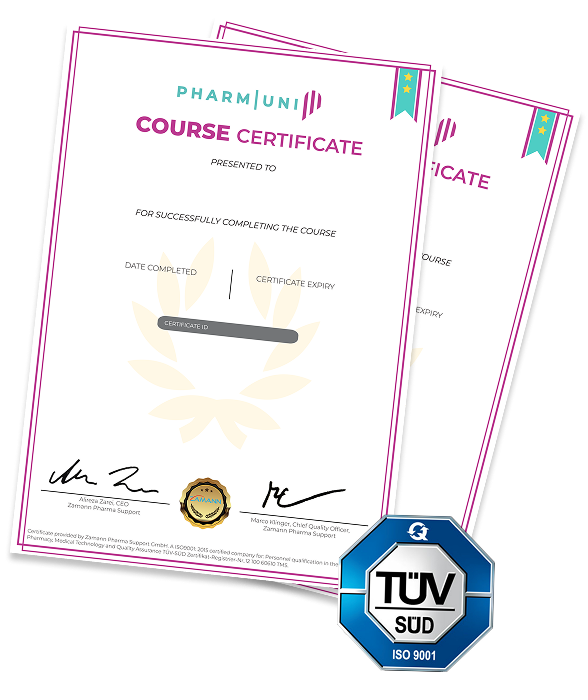
ISO 9001
Quality Management System
Certificate Registration No.: 12 100 60610 TMS
About the Introduction to Good Manufacturing Practices (GMP)
Gain a structured introduction to Good Manufacturing Practice (GMP) and understand why it forms the foundation of quality, safety, and regulatory compliance in the pharmaceutical industry. This course explains how GMP ensures that medicines are consistently produced and controlled according to defined quality standards.
You will develop a clear understanding of the core principles of GMP, how they apply in daily operations, and why regulatory authorities expect strict adherence to documented procedures and controlled processes.
The course focuses on key GMP concepts in practice, including:
• The purpose and principles of GMP in pharmaceutical manufacturing
• The role of documentation, traceability, and data integrity
• Responsibilities of employees working in regulated environments
• How GMP supports product quality and patient safety
Through structured explanations and practical workplace examples, this course helps learners understand how GMP requirements translate into everyday behaviour in production, laboratory, and quality environments. It is best suited to professionals who are new to regulated industries or who require a clear foundational understanding of GMP expectations.
Upon successful completion of this course, the learner has demonstrated the ability to:
Learning Objective 1
Identify GMP’s purpose and core principles in protecting product quality and patient safety
Learning Objective 2
Relate GMP, cGMP, and GxP frameworks to the pharmaceutical QMS
Learning Objective 3
Recognize GMP compliance responsibilities across QA, QC, Manufacturing, and Regulatory Affairs
Learning Objective 4
Identify global authorities shaping GMP expectations, including EMA, FDA, WHO, and ICH
Learning Objective 5
Apply GMP principles in documentation, training, contamination control, and material handling
Learning Objective 6
Connect risk-based thinking, change control, CAPA, and qualification to GMP improvement and quality culture