Role of Cleaning Design in Cleaning Validation
Role of Cleaning Design in Cleaning Validation
Version 1.0
Released on 19/11/2025
Learn how design choices and process factors drive effective cleaning and reliable validation within GMP manufacturing.
- English
- Available on app
- + Certificate
Version 1.0
Released on 19/11/2025
5
(1 Reviews)
Role of Cleaning Design in Cleaning Validation
Subscribe to Pharmuni Premium
- All courses and career paths
- All quizzes and certificates
- All learning tools and assessments
- Cancel anytime
About the Role of Cleaning Design in Cleaning Validation
Role of Cleaning Design in Cleaning Validation introduces the principles that shape cleaning process design and development in pharmaceutical manufacturing. This course explains how core design elements such as cleaning location, automation level, equipment configuration, materials of construction, surface finish, and cleaning agent selection establish the conditions in which a cleaning process must operate. It also shows how these choices influence control, consistency, reproducibility, and the evidence needed to support successful cleaning validation.
You will gain a practical understanding of how design decisions made early in development affect validation scope, documentation, contamination risk, sampling needs, and long-term control of cleaning performance. The course explores how soil, surface, and cleaning agent interact, how physical, chemical, and operational factors influence cleanability, and why process conditions and equipment design can lead to different validation outcomes even when procedures appear similar.
The course focuses on key aspects of cleaning design in practice, including:
• Why cleaning process design and development are essential foundations of cleaning validation
• Key design elements that influence cleaning effectiveness and reproducibility
• Physical, chemical, and operational factors that affect cleanability
• How design decisions shape validation scope, documentation, and ongoing control
Through structured explanations and practical examples, this course helps you understand how thoughtful cleaning design reduces validation complexity, improves consistency, and supports reliable GMP cleaning performance. It is best suited to professionals who want to be involved in cleaning validation, quality assurance, manufacturing, or engineering who need a clearer understanding of how design decisions influence validation activities.
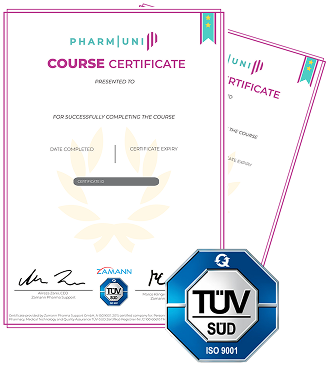
Certificate provided by Zamann Pharma Support GmbH, an ISO 9001:2015 certified company for personnel qualification in the fields of Pharmacy, Medical Technology, and Quality Assurance. Certification body: TÜV SÜD Certificate Registration No.: 12 100 60610 TMS
Pharmuni Certificate
Zamann Pharma Support GmbH
Personnel qualification in the field of pharmacy, medical technology and quality assurance.
Consulting service in the field of pharmacy, medical technology and quality assurance.
Your Learning Objectives
This course explores how design and development choices shape validation outcomes. You will see how early design awareness reduces validation complexity, improves consistency, and prevents issues that often appear during qualification or routine monitoring. By the end you will be able to:
Learning Objective 1
Explain why cleaning process design and development are essential foundations of cleaning validation.
Learning Objective 2
Identify the key design elements that influence the effectiveness and reproducibility of cleaning validation. (such as equipment configuration, cleaning methods, and agent selection)
Learning Objective 3
Describe how physical, chemical, and operational factors influence cleanability and contribute to common validation challenges.
About the author


This course is included in these career paths
Discover tailored career paths designed to help you grow in the pharmaceutical industry. Whether you're just starting out or looking to specialize, find the roles, skills, and learning steps that align with your goals.
Benefits of this Course
Get valuable resources, and ISO backed certification through our assessment of your knowledge and access global jobs only for Pharmuni alumni.
- Downloadable Resources
- Fast-Tracked Qualification
- Exclusive Assessment Quiz
- Skill Tree Levelup
- Customer Support
- Sharable & Downloadable Certification
Learner Reviews
FAQs
Who is this course suitable for?
This course is suitable for professionals who would like to be involved in cleaning validation, quality assurance, engineering, or manufacturing in pharmaceutical environments. It is particularly valuable for learners who need to understand how early process and equipment design decisions shape cleaning performance and validation outcomes.
How will this course help in advancing my career?
By completing this course, you will build a stronger understanding of how cleaning process design supports reliable validation and long-term contamination control. This can help you contribute more confidently to cleaning-related decisions, interpret validation data more effectively, and strengthen your readiness for roles involving cleaning validation, process development, engineering support, or GMP quality oversight.
What topics are covered in the Role of Cleaning Design in Cleaning Validation course?
This course introduces the key principles of cleaning process design, including:
- Why cleaning design is a critical foundation for successful validation
- Equipment configuration, automation, cleaning location, and agent selection
- How soil, surface, and cleaning parameters influence cleanability
- How design decisions affect validation scope, sampling, documentation, and reproducibility
What resources and learning materials are provided in the course?
The course includes:
- Structured lessons with supporting text
- Practical examples of design-related cleaning and validation challenges
- Explanations of cleanability factors, process design elements, and validation implications
- Visual and concept-based learning elements to support understanding
- A certificate of completion upon successfully finishing the course
Can I learn at my own pace?
Yes, the course is fully self-paced. You can begin at any time, progress through the material at your own speed, and revisit content whenever needed while you have an active subscription.